Evolution
"While our Spirit is limitless, we must grapple with rules in the material plane."
Some children don't want to grow up. Can you blame them?
"Adulting" is not easy. Facing bills, bosses, taxes, responsibilities. Who would want that? Certain kids just say no. Psychologists have a term for this: failure to launch. It's also been called "Peter Pan Syndrome", a term coined by psychologist Dan Kiley, based on the character created by Scottish writer James Barrie, whose novel, Peter and Wendy, was adapted into a stage play and animated film. The Disney classic features a mythical place called Never-Never Land, where children don't grow up.
Peter Pan Syndrome Characteristics:
- • Avoiding adult responsibilities
- • Difficulty with commitment
- • Seeking constant excitement
- • Fear of aging and change
Peter, who leads these "Lost Boys" is an exaggerated stereotype of a boastful and careless youth, who claims greatness, though such claims are dubious. He has a nonchalant, devil-may-care attitude, facing danger with reckless abandon. It's classic YOLO: "You Only Live Once".
We all know Peter Pans. Their dishes pile up in the sink. They do laundry only when there's nothing left to wear. They love to party, get lost in video games, have trouble keeping down jobs. But they're also a lot of fun, even irresistible–full of energy and ideas, Peter Pans are cheerful, optimistic with numerous interests. But their refusal to grow up creates an illusion of immortality.
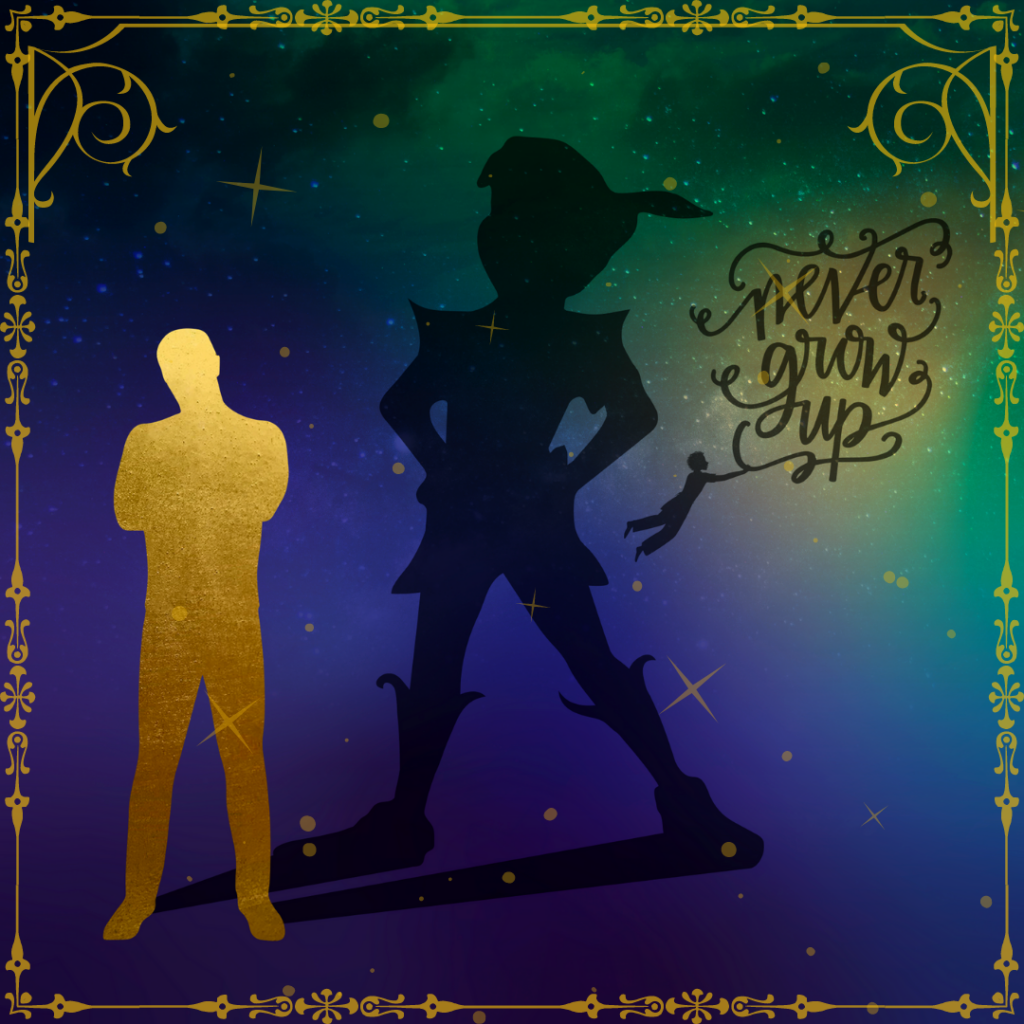
"To die will be an awfully big adventure"
says Peter blithely in Barrie's book, as if it will never happen. But it does. We all die. More importantly, we all undergo ego deaths in every stage of our development. And then we are reborn. This is how we evolve.
Ego deaths are devastating because our ego is wired to think it is immortal, all-important, indispensable, infallible and in charge (like Peter Pan). Contrary to certain New Age psychology, the ego is not all bad. It's a vital and important part of our identity. We could not survive without an ego. It's the bus driver of our bodies, the executor of our willpower. When we get an impulse or idea, we need our ego to carry it out.
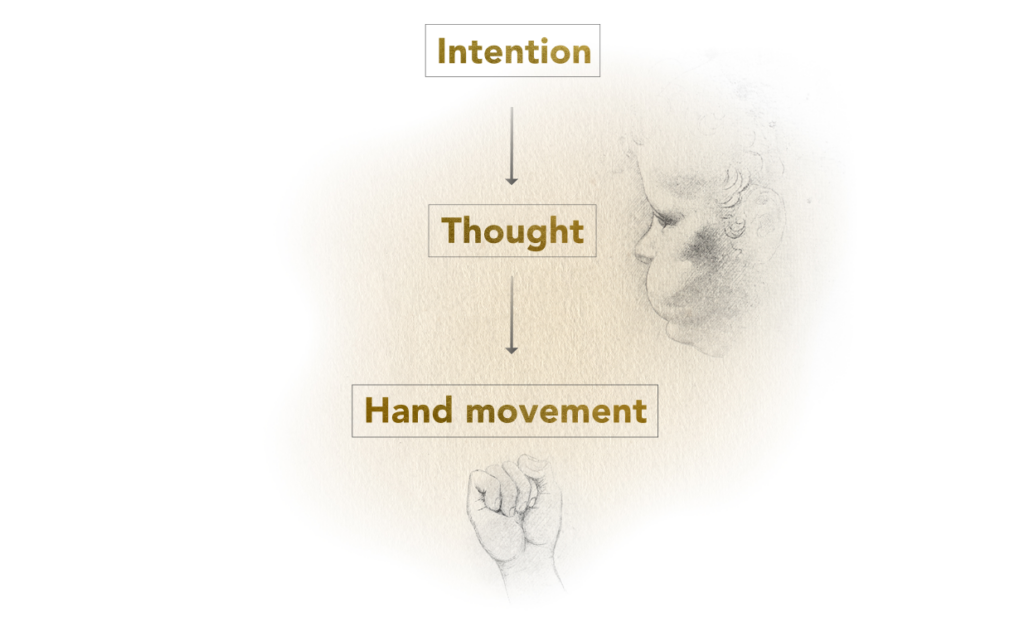
Picture that wondrous moment when infants discover their hands, which happens at around two months. Prior to that the newborn is not even aware of his hands because they fall outside of his field of vision, which is focused almost exclusively on the mother and her breasts–which feel inseparable from him, for all is One. Then these fascinating dual appendages come into frame with all those articulating digits…
My, my…what's this thing? Wait, there's another one. Cool!
Look at the way they move…
Hang on a second, thing. Stop moving!
Amazing. It stopped. Who did that?
Let's try it again. Move! Wow…
Stop moving! Wow…
Move! Incredible… it's "me"…
"I" am the one who's doing this!
You see how that works? Suddenly, there is self-awareness, which means separation. Like an AI droid, we then begin to write the software of our ego identity. It starts rather simply:
Then, it becomes more nuanced.
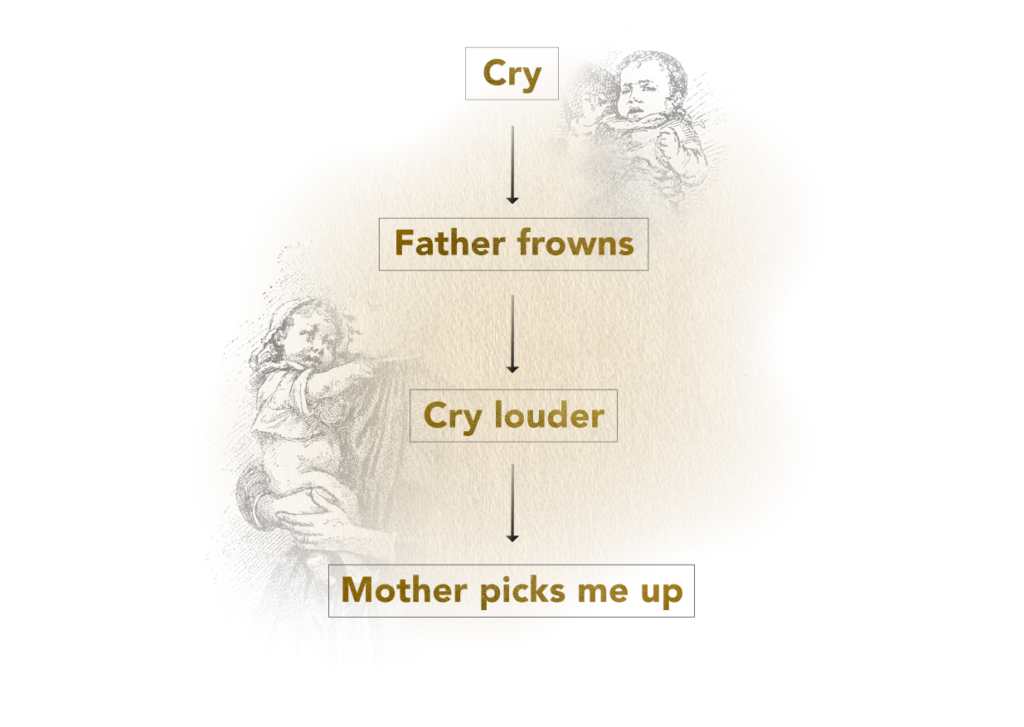
As the "ego program" evolves, our mind creates a set of coding rules and guidelines to govern future development, such as:

Thus, we begin to stifle behaviors and traits that don't appear to serve us and favor those which seem to increase our stature and autonomy. This is how we form our ego personalities. There is nothing nefarious or untoward about this. It is the nature of being human. We must individuate. But it certainly can be tricky.
"Our task as humans, if we wish to evolve spiritually, is to integrate the seen and the unseen, our immortal soul with our finite body."
Related Articles
Facing Myself Through the Camera Lens
I thought I was making a film about healing. In the end, it was the film that helped heal me.
Taoism
Flowing with Nature brings health, happiness, and longevity.
Christianity
In the act of forgiving, and even loving our enemies, we create the opportunity for rebirth.